
Enabling the Next Phase of AI Optical Infrastructure
OFC 2026 Takeaways, Part 2 – From Industry Shifts to Technology Implementation
 April 30, 2026
Christian Urricariet
Senior Director, Product and Strategic Marketing

OFC 2026 made one point unmistakably clear: AI infrastructure is no longer driven solely by higher bandwidth. It is pushing the entire optical ecosystem to solve for scaling in bandwidth, power, thermal efficiency, reliability, manufacturability, and supply-chain resilience.
That shift was visible across the exhibition and conference. 1.6T optics and 200G/lane technologies are moving from feasibility into deployment, co-packaged optics (CPO) is advancing from concept toward industrialization, new MSAs are emerging around scale-up architectures, and 400G/lane is becoming the next major development target. At the same time, enabling technologies such as external laser sources, VCSEL-based scale-up optics, and optical circuit switching (OCS) are gaining strategic importance.
Against that backdrop, OFC 2026 was an important opportunity to show how Lumentum’s technology portfolio maps directly to these market transitions.
Next-Generation Optical Connectivity: The Path to 3.2T
A good example is the industry’s move to 1.6T pluggable modules. This generation is now clearly taking shape around 200G/lane PAM4, with multiple implementations emerging across the hyperscale ecosystem. At our booth, Lumentum demonstrated two live NVIDIA 1.6T 2xDR4 OSFP transceiver modules built on different optical architectures, but both enabled by Lumentum lasers: one incorporating our Ultra High-Power (UHP) laser as the CW light source for an NVIDIA silicon photonics engine, and the other using our 200G EMLs in an 8x200G architecture. The modules were shown in optical loopback with real-time BER results, highlighting both signal integrity and practical module operation.
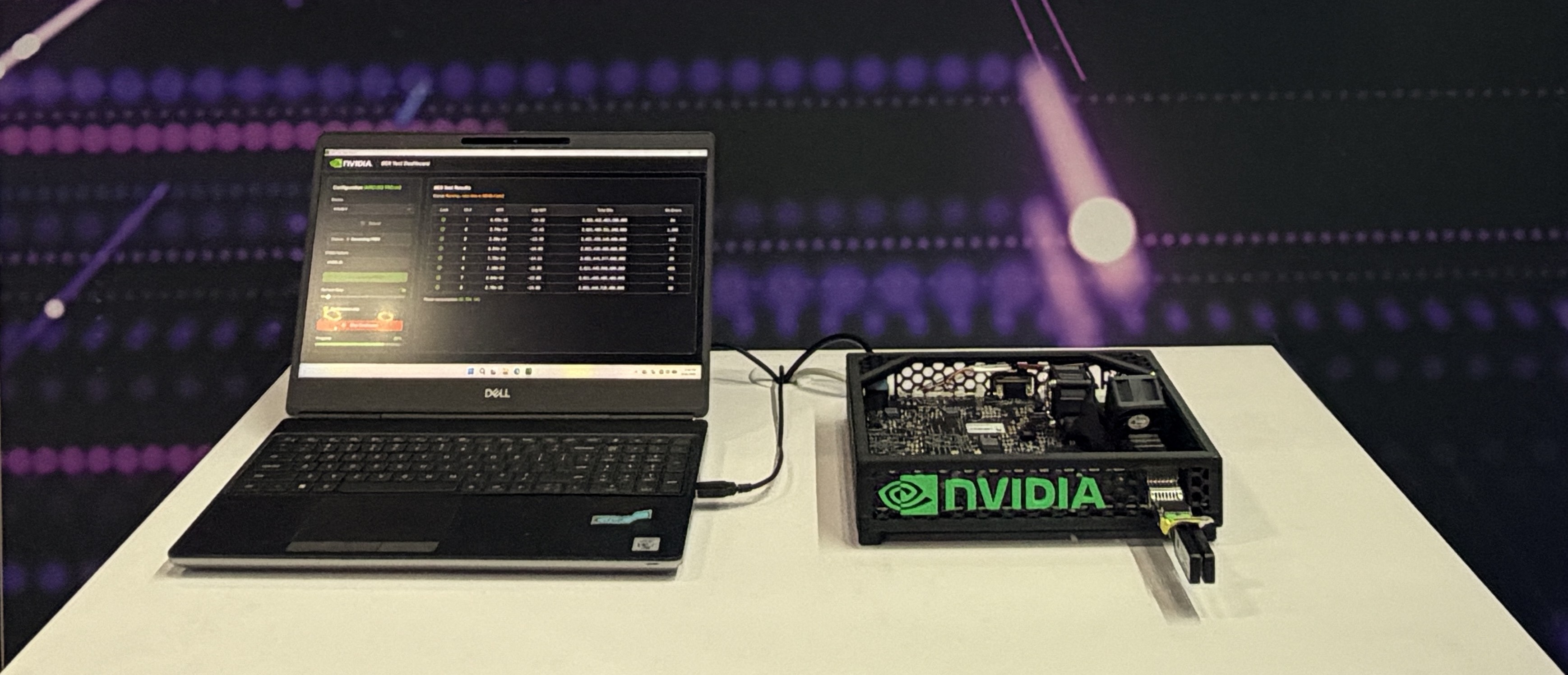
Image: NVIDIA 1.6T 2xDR4 transceiver module using Lumentum UHP lasers
Those demonstrations mattered for more than performance alone. They showed that the path to 1.6T is not defined by a single device architecture. Customers increasingly need multiple high-performance, high-reliability technology options to support different module designs, integration strategies, and supply-chain requirements. This aligns well with Lumentum’s depth in indium phosphide laser technology across both external laser and EML-based architectures, backed by manufacturing scale.
In parallel, OFC 2026 also highlighted early progress toward the next scaling step: 400G per lane. While most demonstrations remained at the component level, Lumentum showed a live 4x400G EML-based pluggable module, illustrating a practical path to future 3.2T pluggable modules based on 8x400G architectures. This demonstration reinforces that indium phosphide-based EML technology can scale to higher data rates while maintaining the signal integrity and reliability required for data center deployments. It also highlights the next system challenge: not just achieving 400G per lane at the device level, but closing power, thermal, and integration constraints at the module level.
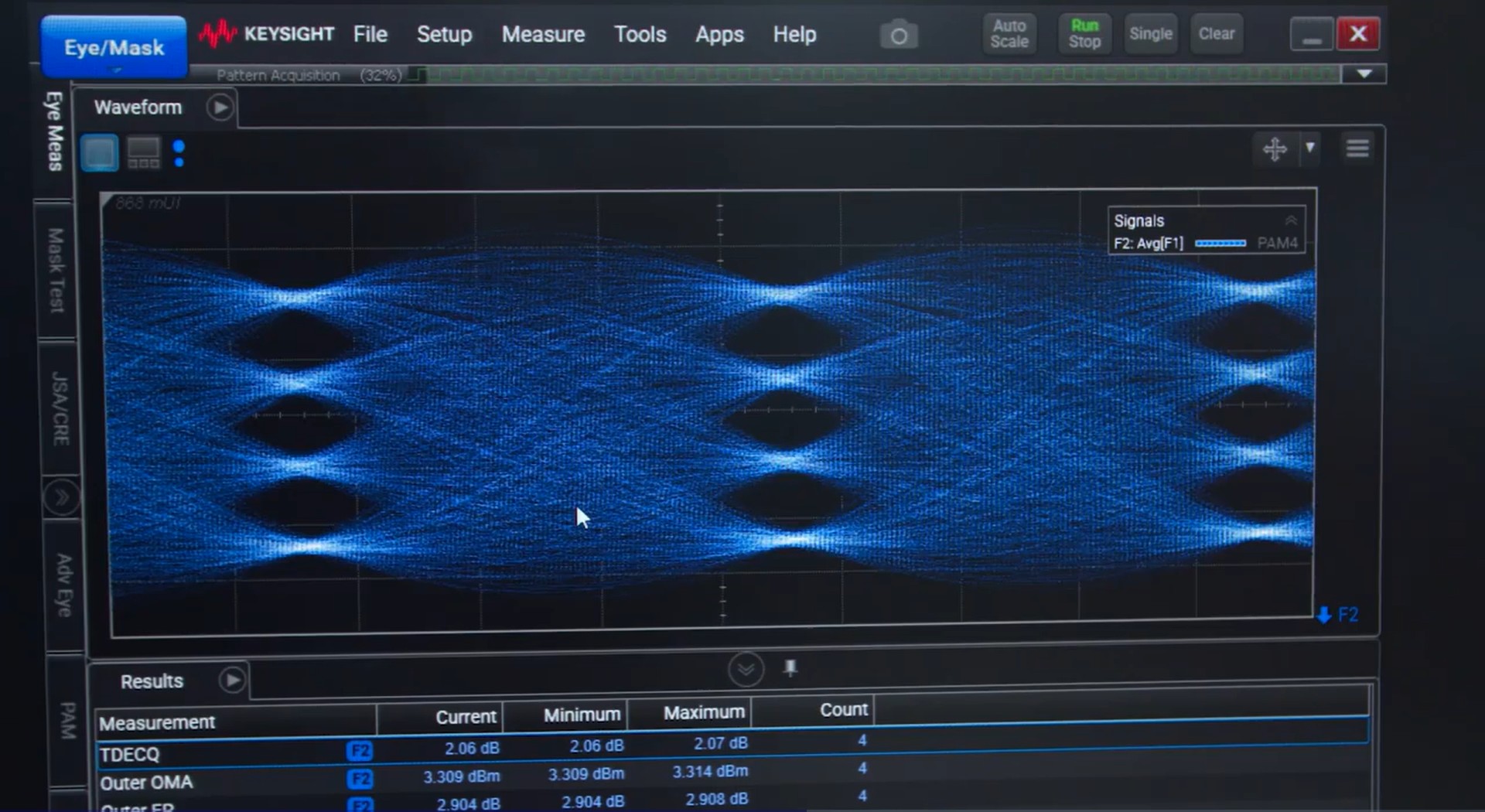
Image: Optical transmitter eye pattern from Lumentum 400G differential EML
New Optical Architectures for AI Network Scaling
OFC also made clear that CPO is moving from concept to deployment readiness. The discussion is no longer just about whether CPO can work. It is about how to industrialize it, how to standardize the ecosystem around it, and how to support multiple architectural approaches for scale-up networks. New initiatives such as the OCI, Open CPX, and XPO MSAs all reflect that the industry is trying to move from isolated demonstrations to deployable system architectures.
Lumentum’s OFC demonstrations reflected that same transition. In external laser sources, we showed that our first generation of UHP-based ELSFPs is now being extended in two important directions. First, we demonstrated an 800 mW Super High-Power (SHP) laser, designed to support higher optical power fan-out to a larger number of optical engines. Second, we demonstrated 16-channel DWDM UHP lasers, addressing future fiber-constrained architectures where higher wavelength density and centralized laser delivery become increasingly important.
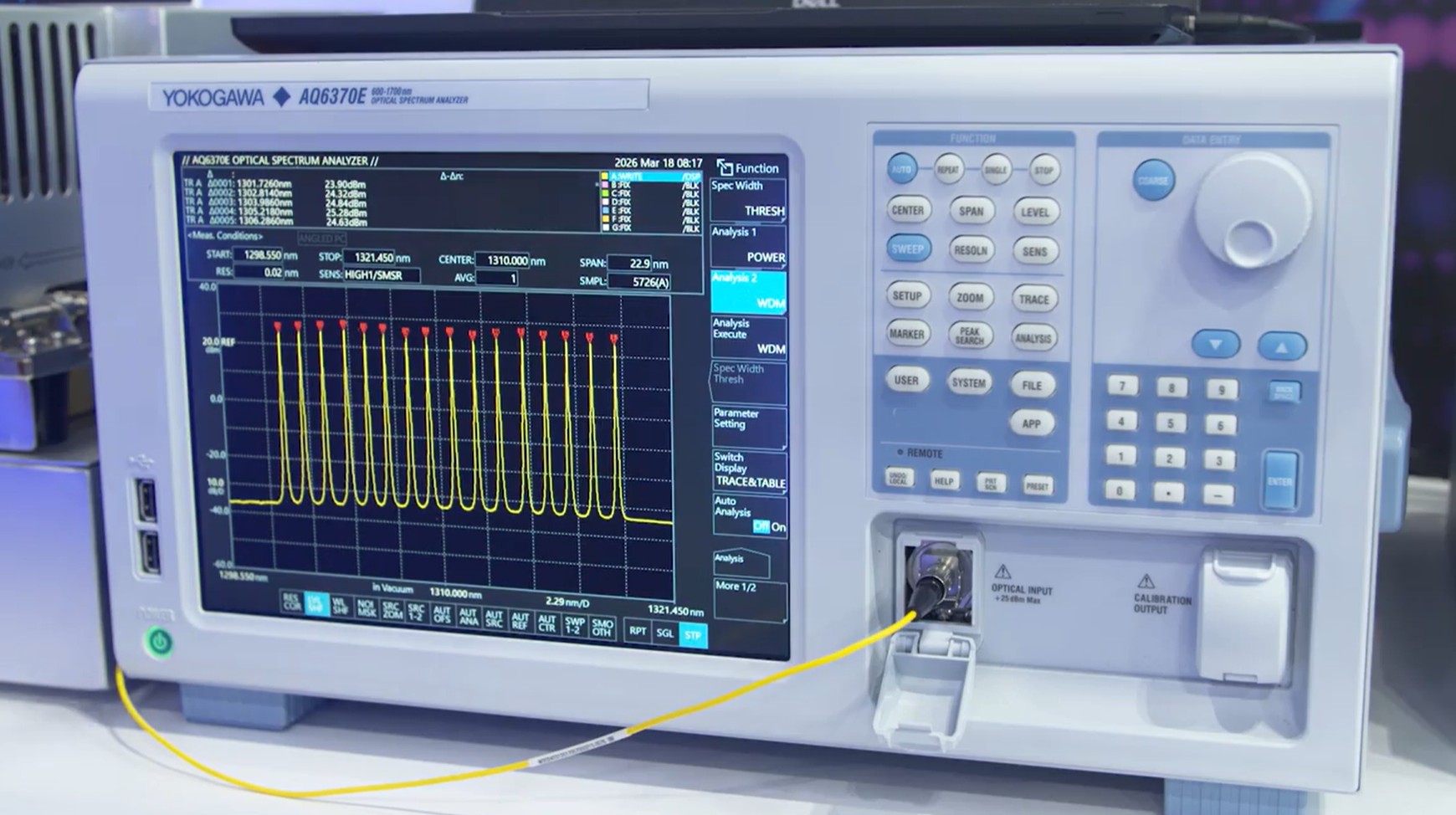
Image: 16 DWDM wavelengths @200GHz supported by Lumentum’s UHP laser
Another important theme at OFC was the rise of alternative scale-up architectures. While much of the industry focus remains on silicon photonics and micro-ring-modulator-based CPO, there is growing interest in VCSEL-based approaches for so-called “slow-and-wide” scale-up fabrics, where lower-speed parallel optical channels can improve overall energy efficiency by reducing dependence on very high-speed electrical SerDes. Here again, Lumentum showed relevant leadership, with a live VCSEL-based optical scale-up architecture demonstration that highlighted a different path to solving the same system problem: how to move very high bandwidth efficiently at rack and cluster scale. Industry analysts specifically noted Lumentum’s VCSEL-based CPO demonstration as an alternative to more supply-constrained indium phosphide approaches in some scale-up scenarios.
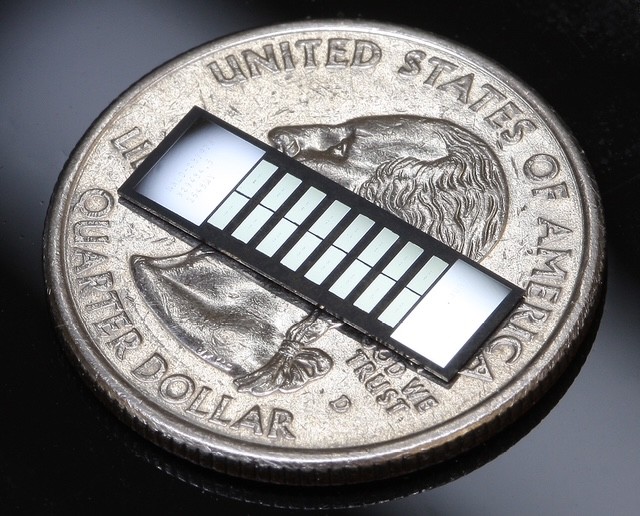
Image: Lumentum 10 Tbps VCSEL+PD optical engine prototype based on 3D FOWLP
Scaling AI Fabrics and System-Level Implications
Beyond pluggable optics and CPO, OFC 2026 also reinforced the growing role of OCS in AI fabrics. As AI clusters scale, static network topologies become less efficient. OCS offers a path to more dynamic, energy-efficient connectivity and is gaining momentum as AI fabrics scale. Lumentum’s position in this market was visible not only through our own portfolio, but also through ecosystem validation, including Marvell’s live booth demo featuring our R300 OCS.
Taken together, these demonstrations showed how Lumentum is positioned across multiple layers of the emerging AI optical stack. We are not participating in just one transition. We are addressing several of them at once: 1.6T pluggable modules with 200G/lane EMLs and UHP lasers, the emerging 400G/lane module ecosystem, next-generation external laser sources for CPO and NPO, VCSEL-based scale-up optics, and OCS for more dynamic AI fabrics.
The direction is clear: AI infrastructure is no longer defined by a single optical architecture or a single scaling vector. It is evolving into a set of parallel approaches—pluggable, near-packaged, and co-packaged—each optimized for different constraints in power, density, reach, and serviceability.
Enabling this environment requires more than individual device innovation. It requires the ability to deliver high-performance optical technologies across multiple architectures, at scale, and with the reliability and manufacturability demanded by hyperscale deployments.
This is where the next phase of optical innovation will be defined—and where the role of photonics continues to expand from connectivity to system-level enablement.
Visit our show recap to see all Lumentum technology demos from OFC.